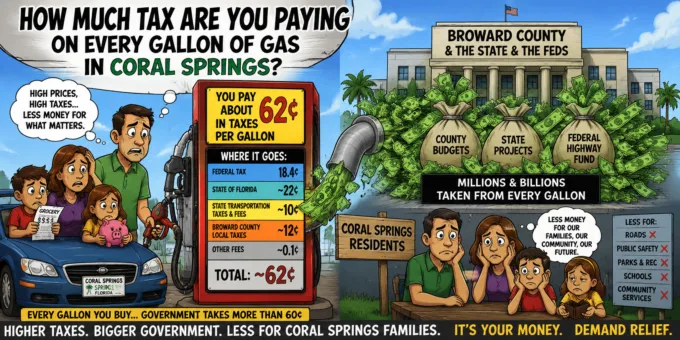
MAY 11, 2026 : Every time drivers in Coral Springs pull up to the pump, a surprisingly large portion of the price they pay goes directly to government taxes and fees.
Most people see the price on the sign and blame oil companies or gas stations. But in reality, federal, state, and local governments collect a substantial amount from every gallon sold — and in Broward County, the total is among the highest in Florida.
More Than 60 Cents Per Gallon in Taxes
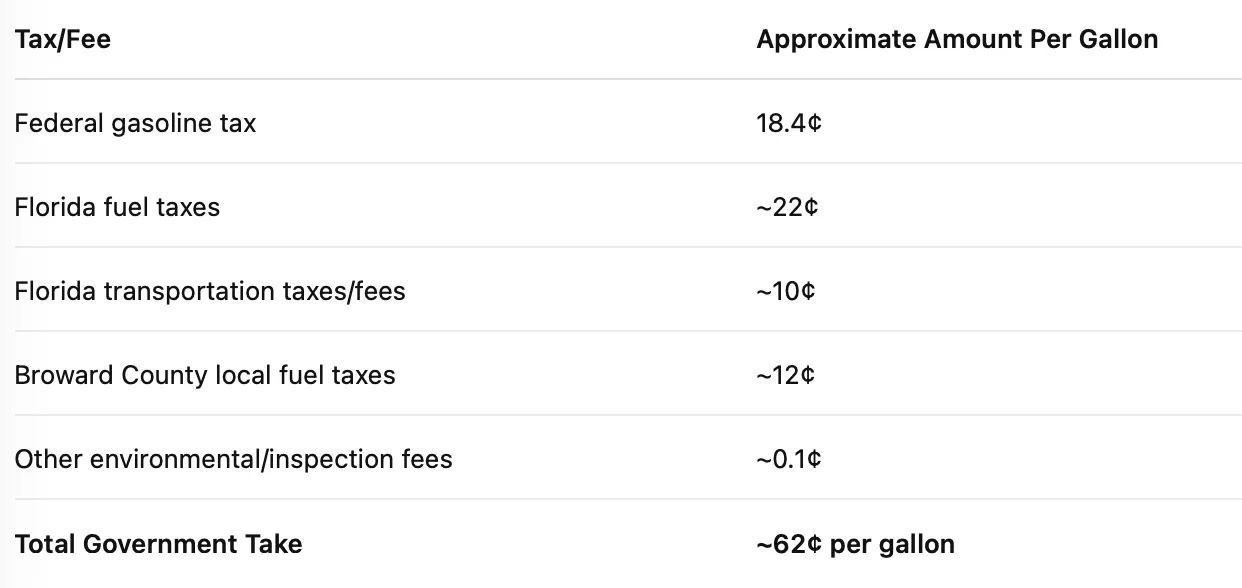
Drivers in Coral Springs currently pay approximately 62 cents in taxes and government fees on every gallon of gasoline purchased.
That means:
- A 15-gallon fill-up includes roughly $9.30 in taxes
- A 20-gallon SUV fill-up includes more than $12 in taxes
- A family using 150 gallons per month may be paying nearly $1,100 per year in gasoline taxes alone
Here’s where the money goes:
Broward County Drivers Pay More
Broward County drivers pay some of the highest local fuel taxes in Florida because the county imposes most of the optional local fuel taxes allowed by state law.
That means Coral Springs residents often pay noticeably more in taxes at the pump than drivers in neighboring counties.
While the county argues the money supports transportation and infrastructure, many residents may be surprised to learn how much of every gasoline purchase goes to government.
Where Does the Money Go?
The revenue is split among:
- The federal government
- The State of Florida
- Broward County
- Local transportation programs
Federal gas taxes help fund the national Highway Trust Fund.
Florida uses fuel-tax revenue for:
- highway construction
- road maintenance
- transportation debt
- transit systems
- infrastructure projects
Broward County receives local-option fuel taxes that help fund transportation and roadway programs throughout the county.
Coral Springs Gets Only a Small Piece
Despite residents paying high fuel taxes, only a relatively small portion goes directly to the City of Coral Springs itself.
Most of the money is collected and controlled at the federal, state, and county levels.
The city receives only a share of county transportation distributions, which amounts to a tiny fraction of the total taxes paid at the pump.
Why Drivers Feel “Double Taxed”
Many residents question why they continue paying:
- high fuel taxes,
- toll roads,
- express lane fees,
- and vehicle registration fees
all at the same time.
Florida relies heavily on toll roads and user fees, especially in South Florida, where drivers now routinely pay for:
- Florida’s Turnpike
- I-95 Express lanes
- I-595 Express lanes
- managed toll lanes throughout the region
Critics argue that drivers are effectively paying multiple times for the same transportation infrastructure.
What Happens as Gas Prices Rise?
One common misconception is that governments automatically collect huge windfalls when gasoline prices increase.
Most gasoline taxes are actually fixed per gallon, not percentage-based sales taxes. However, Florida transportation taxes and fuel-related fees still generate billions of dollars annually statewide.
Florida collects an estimated $5 billion to $6 billion per year from fuel taxes and related transportation fees.
The Bottom Line
Whether gas costs $2.50 or $4.50 per gallon, Coral Springs drivers continue paying one of the highest gasoline tax burdens in Florida.
And while drivers often focus on oil companies when prices spike, governments at every level quietly collect billions from every trip to the gas station.
Could Broward County Give Drivers Relief at the Pump?
If Broward County leaders wanted to provide immediate relief to drivers, they could reduce or suspend the county’s local fuel taxes.
Currently, Broward County collects roughly 12 cents per gallon in local gasoline taxes and transportation fuel fees. That means:
- a 15-gallon fill-up includes about $1.80 going to Broward County-related taxes
- a commuter filling up weekly could save more than $90 to $120 per year
Countywide, these local fuel taxes generate an estimated $150 million to $250 million annually.
Considering Broward County’s total budget is approximately $8 billion to $9 billion, the county could theoretically eliminate its local gas taxes by reducing overall spending by only about 2% to 3%.
For many residents struggling with:
- inflation,
- insurance increases,
- tolls,
- housing costs,
- and rising food prices,
even a modest reduction at the pump could provide meaningful relief.
Critics argue that government has become increasingly dependent on fuel-tax revenue while drivers continue paying:
- gasoline taxes,
- toll road fees,
- vehicle registration fees,
- and sales taxes,
all while South Florida traffic congestion continues to worsen.
Supporters of the taxes say the revenue is necessary to maintain roads and transportation infrastructure. But opponents say Broward County could prioritize spending differently and give taxpayers a break instead of continuing to increase the burden on drivers.